

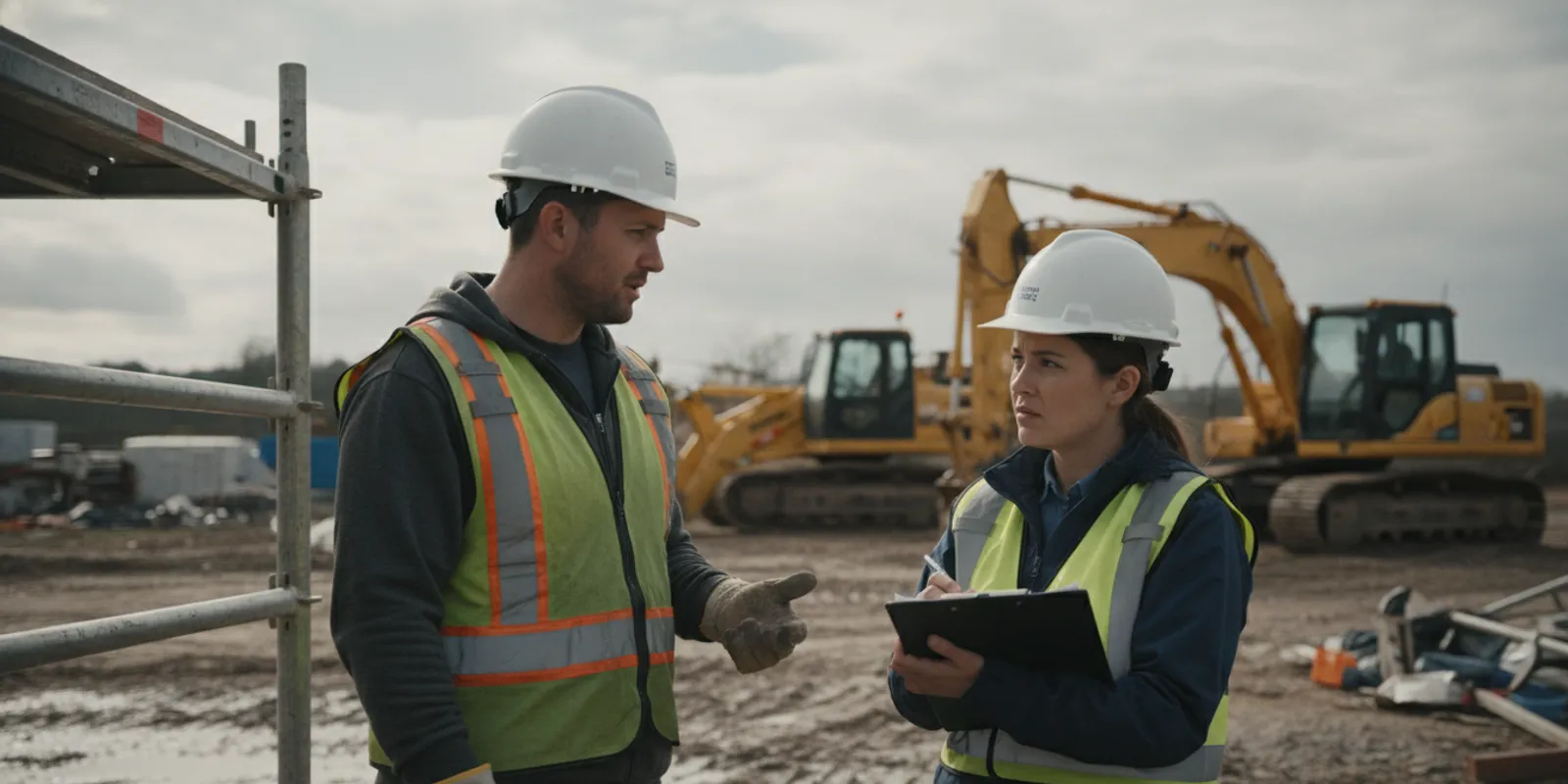
An Illinois construction accident OSHA investigation can raise urgent questions for an injured worker and their family: What will investigators look at, who may they speak with, and does an OSHA finding decide who pays for an injury? The answers depend on the incident and the people involved. An OSHA investigation examines workplace safety; it is separate from a workers’ compensation claim and any personal injury claim.
What does OSHA investigate after a construction accident?
The Occupational Safety and Health Administration (OSHA) enforces workplace safety requirements. After a serious incident, an OSHA inspection may examine the worksite, equipment, safety procedures, training, and the events leading up to the injury. The purpose is to assess workplace safety and whether applicable requirements were followed. The agency’s inspection is not a private lawsuit, a medical evaluation, or a decision on the worker’s entitlement to benefits.
Construction incidents can involve falls, scaffolds, ladders, trenches, falling objects, machinery, vehicles, electrical hazards, or other site conditions. An investigator may look beyond the immediate event. For example, a fall from a platform may prompt questions about the platform’s condition, fall protection, access, training, site supervision, and how work was assigned. Those questions help build a fuller picture; they do not by themselves prove that any one person or company caused the injury.
OSHA’s role also depends on the worker’s employer. Federal OSHA generally covers private-sector workplaces in Illinois. Illinois OSHA, within the Illinois Department of Labor, covers state and local government workplaces. Where a site has public and private entities or several employers, the applicable oversight and responsibilities may require closer review.
How may an OSHA inspection unfold?
Every inspection is different, but an investigator may take several practical steps:
- Ask how the incident was reported. Investigators may identify the type of event, the work being done, and which employers or contractors were present.
- Walk through the site. They may examine the location, equipment, access routes, safety barriers, warning signs, and other conditions relevant to the event. Conditions can change quickly after an accident, so the timing and available records may matter.
- Speak with people who may have relevant information. This can include the injured worker, witnesses, supervisors, safety personnel, or employer representatives. Investigators may ask what each person saw, heard, or did, rather than inviting guesses about blame.
- Review records. Depending on the incident, relevant material may include safety policies, training records, equipment inspection or maintenance logs, work assignments, incident reports, and photographs or video.
- Assess compliance and decide what follows. OSHA may close an inspection, request more information, or issue citations when it finds violations. The result depends on the evidence and the agency’s review; an inspection does not guarantee a citation.
An inspection may focus on a particular hazard or incident rather than every condition at a construction site. Investigators make their own decisions about the scope of their work and the information they need. A worker or family should not assume that an inspection will gather every piece of evidence relevant to a separate benefits or injury claim.
What evidence may help explain how the accident happened?
Construction sites are active places. Equipment may be moved, temporary barriers may be changed, and a work area may be cleaned or repaired after an incident. That does not mean anyone is concealing evidence; work may need to continue and hazards may need to be addressed. It does mean that reliable information about the original conditions can be important. Investigators and lawyers may consider different records, and each item has to be understood in context.
Depending on the incident, useful information could include:
- Images of the scene. Photographs or video may show the location, equipment, access points, lighting, visible hazards, or warning signs. Note who made an image and when, if known. Do not trespass or enter an unsafe area to take a picture.
- Equipment and maintenance details. Identify the machine, tool, vehicle, scaffold, or protective equipment involved. A model or serial number, inspection tag, maintenance record, or repair history may help distinguish one item from another.
- Work and safety records. Training materials, task assignments, safety meeting notes, and applicable site procedures may show what work was planned and what guidance people received. A worker should preserve only records they are authorized to keep or share.
- People’s observations. Names and contact details for witnesses can help locate people who saw conditions before or after the event. Each person should record their own memory independently; witnesses should not be coached or asked to align stories.
- Medical and employment information. Treatment records, work restrictions, schedules, and wage information may help describe the injury and its effects. Keep these separate from assumptions about why the incident occurred.
Keep original files where possible and avoid editing images or messages in a way that changes their content. If you make notes later, label them as notes and distinguish them from records created at the time. Do not secretly record conversations or access a company system without permission. If an employer or another party asks you to provide an item, ask what is being requested and keep a record of what you shared. A lawyer can help determine which information is relevant and how it may fit with agency records or a benefits file.
What can an OSHA finding tell you—and what can’t it tell you?
An OSHA citation or other finding may provide information about a safety issue the agency identified. It can be useful context when reviewing what happened. But an OSHA finding does not automatically establish every fact needed for a workers’ compensation claim or a lawsuit. Likewise, the absence of a citation does not prove that an accident was unavoidable or that an injured person has no legal options.
Different processes ask different questions. A workers’ compensation claim concerns benefits related to a work injury or occupational illness. A separate personal injury claim may be considered if the facts support a claim against a third party, such as a contractor or equipment manufacturer. That possibility is not automatic, and the responsible parties and legal issues depend on the particular worksite and events.
An OSHA inspection also does not determine a worker’s diagnosis, treatment needs, lost wages, or eligibility for benefits. Medical providers address care. The Illinois workers’ compensation process addresses disputed benefit issues, which may involve proceedings before the Illinois Workers’ Compensation Commission. A civil injury claim, if supported, follows a different path. Keep those processes distinct when organizing questions and documents. For an overview of the work-injury process, see the firm’s Illinois work injury next steps.
What should an injured worker do while an inspection is pending?
Taking practical steps can help protect health and preserve reliable information. The right steps depend on the injury, medical needs, and circumstances at the site.
- Get medical attention. Tell the treating professional how the incident happened and describe symptoms as accurately as possible. Follow medical guidance and keep copies of visit summaries, work restrictions, prescriptions, and related records.
- Report the incident through the appropriate workplace channel. Make a clear, factual report and keep a copy if available. Do not guess about causes or minimize symptoms. Questions about what to report or how to handle a disputed report can be discussed with a lawyer.
- Write down what you remember. As soon as you are able, note the date and general location, task being performed, equipment involved, conditions you observed, people present, and what happened before and after the injury. Separate what you personally saw from what someone later told you.
- Preserve materials you already have lawful access to. Keep photographs, messages, work schedules, training materials, incident paperwork, and names of witnesses. Do not remove, alter, or take property or records you are not authorized to access.
- Keep a record of the injury’s effects. Track appointments, symptoms, work missed, restrictions, and communications about benefits. These notes can help you explain how the injury affects daily activities and work, but they do not replace medical or employer records.
- Ask for language support when needed. If you are more comfortable speaking Spanish, say so when communicating with an investigator, employer, medical provider, or lawyer. Avoid signing a statement you do not understand; ask for an explanation or appropriate language assistance.
Be truthful if an investigator asks questions. If you do not know or remember something, say that rather than filling in gaps. You may ask who is requesting information, what the next step is, and how to provide additional material. Do not interfere with an inspection or try to coordinate accounts with other witnesses. If there is uncertainty about a formal statement or a document, get advice before deciding how to respond.
How can families help after a serious or fatal accident?
A family member may be trying to arrange care, understand an investigation, and manage work and household responsibilities at the same time. Start by preserving documents and contact information without altering records. Keep a simple timeline of agency calls, employer communications, medical appointments, and questions that remain unanswered. If the injured person cannot communicate, a family member can share observations and ask how to provide information, while avoiding assumptions about who has legal authority to act on the person’s behalf.
After a fatal incident, OSHA’s workplace review and any workers’ compensation or wrongful-death questions remain distinct processes. Which person may pursue a claim, what records are needed, and which parties could be involved depend on the facts and applicable law. Families can ask a lawyer to explain the possible roles of the employer, contractors, property owner, or equipment maker without presuming that every party is responsible. The firm’s page on wrongful death matters in Waukegan discusses that type of inquiry.
Could another company be responsible for a construction injury?
Construction projects often involve multiple businesses, but the number of companies at a site does not establish fault. Depending on the evidence, questions may arise about who controlled the work area, supplied or maintained equipment, performed a task, communicated a hazard, or made a safety decision. A contractor, property owner, or manufacturer could be relevant in some cases; in others, the facts may not support a claim against a third party.
This is one reason to preserve the names of companies and people involved, work assignments, equipment details, photographs, and communications. An OSHA inspection may not resolve every issue about a separate claim. A lawyer can assess whether the available facts warrant looking at a third-party negligence claim in addition to workers’ compensation. Learn more about the firm’s workers’ compensation representation and practice areas.
What questions should you ask about the investigation?
Clear questions can help a worker or family understand what is known and what remains open. Consider asking:
- Which agency is handling the inspection, and who is the investigator?
- What information can I provide, and how should I submit it?
- May I receive language assistance or clarification before giving a statement?
- What records should I keep, and is there a safe way to preserve photographs or messages?
- How does the OSHA process differ from my workers’ compensation matter?
- Could the facts warrant evaluating a separate third-party claim?
Do not rely on an informal conversation to answer every legal question or to establish a deadline. Notice and filing rules can depend on the type of claim and circumstances. Because timing rules are not interchangeable, get advice promptly about the specific matter rather than applying a general timeframe from another case.
Frequently asked questions
Does OSHA investigate every construction accident?
No. OSHA may investigate certain incidents or hazards, but not every injury results in an inspection. Whether an agency investigates depends on the incident and its enforcement priorities. A worker should not wait for an inspection before getting medical care or asking about an injury claim.
Does an OSHA citation guarantee workers’ compensation benefits?
No. A citation may offer information about a workplace safety issue, but workers’ compensation benefits are addressed in a separate process. Eligibility and disputed issues depend on the facts and applicable rules, not solely on whether OSHA issued a citation.
Can I make a claim if OSHA does not issue a citation?
The absence of a citation alone does not answer whether a worker may have a benefits claim or whether a separate third-party claim is supported. Those questions require a review of the injury, work circumstances, and available evidence.
Should I speak with an OSHA investigator?
Be truthful and avoid guessing. You can ask the investigator to clarify a question, explain how to provide information, or arrange language assistance. If you have concerns about a statement or a document, ask a lawyer about your situation.
Understand the investigation before deciding what comes next
An OSHA inspection can be one important source of information after a construction injury, but it is only one part of the picture. Focus first on medical care, accurate records, and understanding which process addresses each question. A lawyer can review the circumstances, explain the difference between workers’ compensation and a possible third-party claim, and help identify next steps based on the facts.